

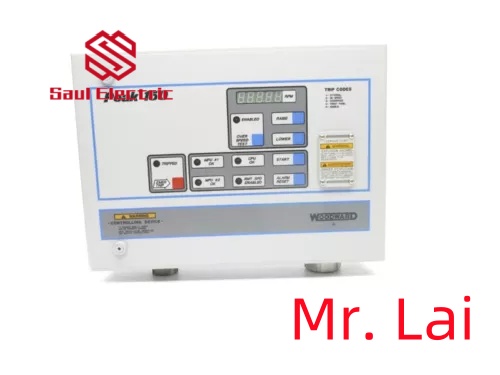
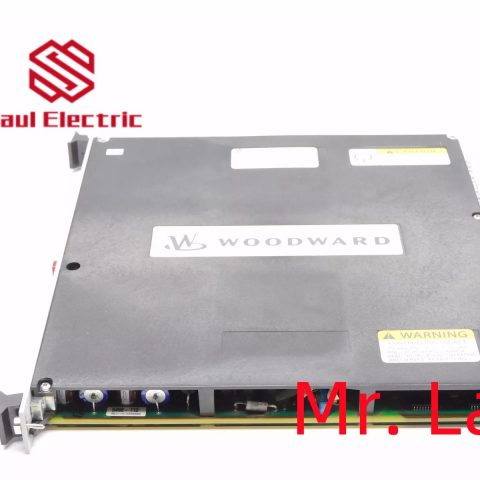
Woodward 5403-535 from SAUL ELECTRIC | In Stock
1.5403-535 Product Overview

The Woodward 5403-535 belongs to the 505/505E series digital turbine controllers. It is a microprocessor-based control module designed for single-valve steam turbines,
including single extraction/admission systems or split-range actuator configurations.
The controller features a front panel Operator Control Panel (OCP) with a two-line, 24-character display and multi-function keypad, allowing easy on-site configuration and monitoring.
2. 5403-535 Technical Specifications and Parameters
| Parameter | Details |
|---|---|
| Power Supply | +24 VDC, approx. 1 A |
| I/O Outputs | Discrete Outputs: 8 Analog Outputs: 6 Actuator Outputs: 2 |
| Display / HMI | Two-line, 24-character LCD, with multi-function keypad |
| Dimensions | Approx. 14 × 11 × 4 in (35.6 × 27.9 × 10.2 cm) |
| Weight | Approx. 9.11 lbs (4.13 kg) |
| Operating Temperature | –4 to +140 °F (–20 to +60 °C) |
| Storage Temperature | –40 to +185 °F (–40 to +85 °C) |
| Humidity Standard | 95% RH at 20-55 °C for 48 hours without damage |
| Protection Class | Typically meets industrial dust and water protection standards |
| Communication Protocol | Supports Modbus, RS-232 / RS-422 serial interfaces |

3. Brand History
Woodward, Inc., founded in 1870 and headquartered in Fort Collins, Colorado, USA, is a global leader in energy control systems. The company has a long history of innovation in turbine control, engine management,
and power generation systems.
Woodward products are widely recognized for their reliability and precision in demanding industrial and power generation applications.
4. Applications in Industrial Automation
The 5403-535 plays a critical role in industrial automation and power generation environments:
- Steam Turbine Control: Manages startup, speed regulation, and extraction/admission control of steam turbines.
- Power Generation Systems: Used in power plants to regulate turbine-driven generators for stable frequency and load management.
- Compressor and Pump Drive Control: Ensures precise speed control for turbine-driven compressors and pumps.
- Process Industry Applications: Applied in chemical plants, refineries, and other industries requiring precise turbine operation.
- Safety and Protection Functions: Includes overspeed protection, critical speed avoidance, actuator travel limits, and event logging for operational safety.

PLC controller maintenance
PLC controller is an important component of industrial automation systems, and if a fault occurs, it may affect the entire production
process. Here are some common steps for repairing PLC controllers:
Confirm the fault phenomenon: When the PLC controller malfunctions, the first thing to confirm is what the fault phenomenon is,
such as the equipment cannot start normally, the equipment cannot operate normally after starting, etc.
Troubleshooting software issues: If the PLC controller experiences software malfunctions, it is necessary to check whether the
program is correct and whether the equipment parameters are set correctly.
Troubleshooting hardware faults: If the PLC controller experiences hardware faults, it is necessary to check whether the power
supply is normal, whether the I/O module is damaged, and whether there are loose connection wires inside the PLC.
Replace damaged components: If a component in the PLC controller is damaged, it needs to be replaced, such as replacing
damaged power supplies, I/O modules, etc.
Restart the PLC controller: After completing the repair, it is necessary to restart the PLC controller and conduct necessary tests
to ensure that the equipment is functioning properly.
It should be noted that PLC controller maintenance requires certain professional knowledge and skills. If unsure how to repair,
please seek the help of professionals. In addition, relevant safety regulations must be strictly followed during maintenance to ensure the safety of personnel and equipment.


There are no reviews yet.