

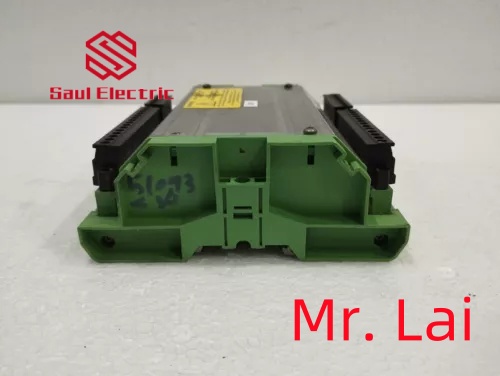
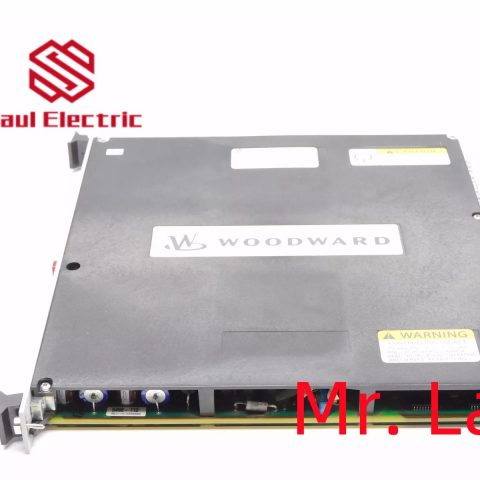
Woodward 5463-582 Price Discount | In Stock
1.5463-582 Product Overview

The Woodward 5463-582 belongs to the 505/505E series digital turbine controllers. It is a microprocessor-based control module designed for single-valve steam turbines,
including single extraction/admission systems or split-range actuator configurations.
The controller features a front panel Operator Control Panel (OCP) with a two-line, 24-character display and multi-function keypad, allowing easy on-site configuration and monitoring.
2. 5463-582 Technical Specifications and Parameters
| Parameter | Details |
|---|---|
| Power Supply | +24 VDC, approx. 1 A |
| I/O Outputs | Discrete Outputs: 8 Analog Outputs: 6 Actuator Outputs: 2 |
| Display / HMI | Two-line, 24-character LCD, with multi-function keypad |
| Dimensions | Approx. 14 × 11 × 4 in (35.6 × 27.9 × 10.2 cm) |
| Weight | Approx. 9.11 lbs (4.13 kg) |
| Operating Temperature | –4 to +140 °F (–20 to +60 °C) |
| Storage Temperature | –40 to +185 °F (–40 to +85 °C) |
| Humidity Standard | 95% RH at 20-55 °C for 48 hours without damage |
| Protection Class | Typically meets industrial dust and water protection standards |
| Communication Protocol | Supports Modbus, RS-232 / RS-422 serial interfaces |

3. Brand History
Woodward, Inc., founded in 1870 and headquartered in Fort Collins, Colorado, USA, is a global leader in energy control systems. The company has a long history of innovation in turbine control, engine management,
and power generation systems.
Woodward products are widely recognized for their reliability and precision in demanding industrial and power generation applications.
4. Applications in Industrial Automation
The 5463-582 plays a critical role in industrial automation and power generation environments:
- Steam Turbine Control: Manages startup, speed regulation, and extraction/admission control of steam turbines.
- Power Generation Systems: Used in power plants to regulate turbine-driven generators for stable frequency and load management.
- Compressor and Pump Drive Control: Ensures precise speed control for turbine-driven compressors and pumps.
- Process Industry Applications: Applied in chemical plants, refineries, and other industries requiring precise turbine operation.
- Safety and Protection Functions: Includes overspeed protection, critical speed avoidance, actuator travel limits, and event logging for operational safety.

2、 Variable frequency speed regulation: Advantages: ① No additional slip loss, high efficiency, wide speed regulation range;
② For situations where low load operation time is long, or where starting and stopping are frequent, the purpose of energy saving and motor protection can be achieved. Disadvantages:
The technology is complex and the price is high.
3、 Inverter motor speed regulation: Advantages: ① It has a simple structure for AC synchronous motors and good speed regulation performance for DC motors;
② When operating at low speeds, use power supply voltage, and when operating at high speeds, use stepper motor back electromotive force for natural commutation,
ensuring reliable operation; ③ No additional slip loss, high efficiency, suitable for starting and speed regulation of high-speed and large capacity synchronous motors.
Disadvantages: Low overload capacity, and the capacity of the original motor cannot be fully utilized.
4、 Cascade speed regulation: Advantages: ① It can feedback and utilize the slip energy generated during the speed regulation process. efficient;
② The device capacity is proportional to the speed regulation range and is suitable for 70% to 95% speed regulation. Disadvantages: Low power factor, harmonic interference,
no braking torque during normal operation, suitable for loads operating in a single quadrant.
5、 Stator voltage and speed regulation: Advantages: ① Simple circuit, small device size, and low price; ② Easy to use and maintain. Disadvantages:
① Increased slip loss during speed regulation, which causes the rotor to heat up and has lower efficiency; ② The speed regulation range is relatively small;
③ Require the use of high slip motors, such as specially designed torque motors, which have softer characteristics and are generally suitable for asynchronous motors below 55kW.
6、 Electromagnetic differential clutch speed regulation: Advantages: ① Simple structure, small control device capacity, and low value; ② Reliable operation and easy maintenance;
③ No harmonic interference. Disadvantages: ① Large speed loss, because the electromagnetic slip clutch itself has a large slip,
so the maximum speed of the output shaft is only 80% to 90% of the synchronous speed of the motor;
② During the speed regulation process, all the differential power is converted into thermal energy, resulting in low efficiency.
7、 Rotor series resistance speed regulation: Advantages: ① Low technical requirements, easy to master; ② Low equipment costs;
③ No electromagnetic harmonic interference. Disadvantages: ① The series cast iron resistor can only be adjusted in stages.
If liquid resistors are used for stepless speed regulation, higher maintenance and upkeep requirements will be required;
② The additional slip power during the speed regulation process is all converted into losses in the form of heat generated by the series resistor, resulting in low efficiency.
③ The speed range is not large.


There are no reviews yet.