

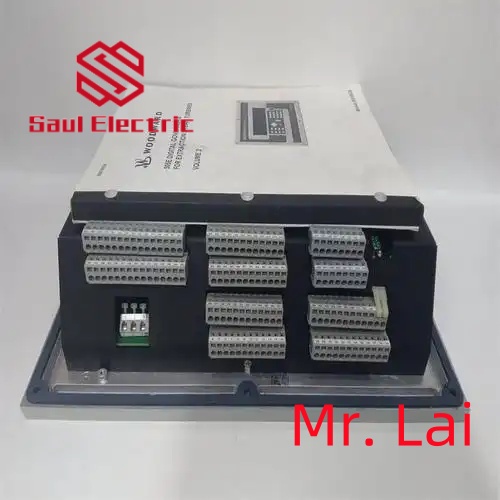
Woodward 5503-279 Price Discount | In Stock
1.5503-279 Product Overview
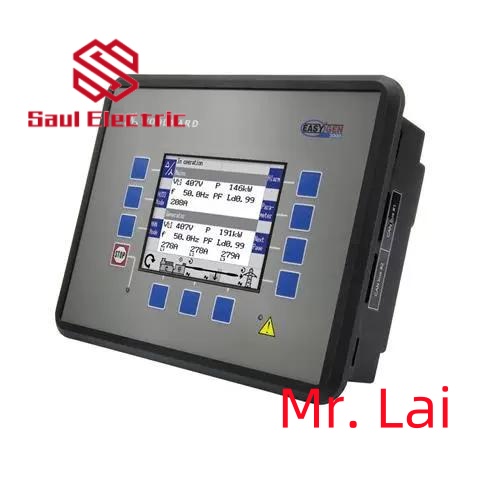
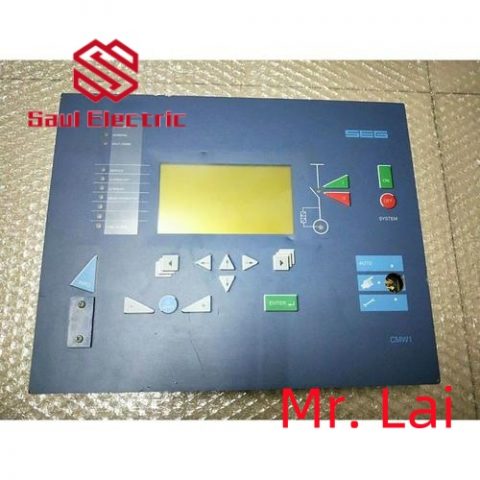
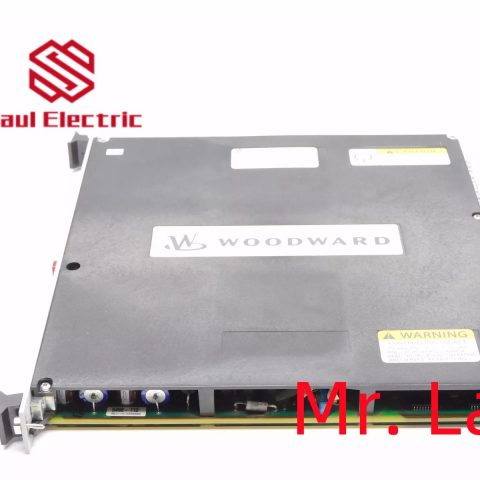
Woodward controller speed controller
The Woodward 5503-279 belongs to the 505/505E series digital turbine controllers. It is a microprocessor-based control module designed for single-valve steam turbines,
including single extraction/admission systems or split-range actuator configurations.
The controller features a front panel Operator Control Panel (OCP) with a two-line, 24-character display and multi-function keypad, allowing easy on-site configuration and monitoring.
2. 5503-279 Technical Specifications and Parameters
| Parameter | Details |
|---|---|
| Power Supply | +24 VDC, approx. 1 A |
| I/O Outputs | Discrete Outputs: 8 Analog Outputs: 6 Actuator Outputs: 2 |
| Display / HMI | Two-line, 24-character LCD, with multi-function keypad |
| Dimensions | Approx. 14 × 11 × 4 in (35.6 × 27.9 × 10.2 cm) |
| Weight | Approx. 9.11 lbs (4.13 kg) |
| Operating Temperature | –4 to +140 °F (–20 to +60 °C) |
| Storage Temperature | –40 to +185 °F (–40 to +85 °C) |
| Humidity Standard | 95% RH at 20-55 °C for 48 hours without damage |
| Protection Class | Typically meets industrial dust and water protection standards |
| Communication Protocol | Supports Modbus, RS-232 / RS-422 serial interfaces |
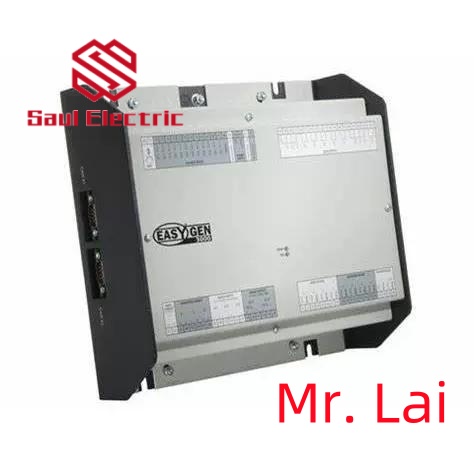
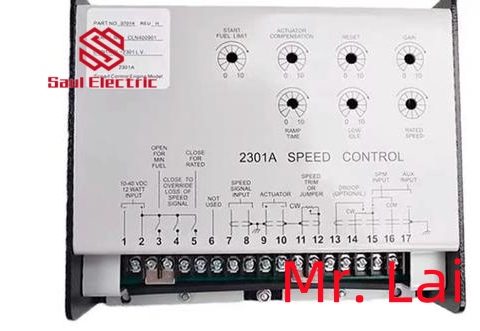
Woodward controller speed controller
3. Brand History
Woodward, Inc., founded in 1870 and headquartered in Fort Collins, Colorado, USA, is a global leader in energy control systems. The company has a long history of innovation in turbine control, engine management,
and power generation systems.
Woodward products are widely recognized for their reliability and precision in demanding industrial and power generation applications.
4. Applications in Industrial Automation
The 5503-279 plays a critical role in industrial automation and power generation environments:
- Steam Turbine Control: Manages startup, speed regulation, and extraction/admission control of steam turbines.
- Power Generation Systems: Used in power plants to regulate turbine-driven generators for stable frequency and load management.
- Compressor and Pump Drive Control: Ensures precise speed control for turbine-driven compressors and pumps.
- Process Industry Applications: Applied in chemical plants, refineries, and other industries requiring precise turbine operation.
- Safety and Protection Functions: Includes overspeed protection, critical speed avoidance, actuator travel limits, and event logging for operational safety.

4. What is PLC
Programmable logic controller is a digital operational electronic system specifically designed for use in industrial environments.
It uses a programmable memory to store instructions for performing logical operations, sequential control, timing, counting, and
arithmetic operations internally, and controls various types of mechanical equipment or production processes through digital or
analog input and output.
5. Characteristics of PLC
(1) High reliability. Due to the use of single-chip microcomputers in most PLCs, the integration level is high, coupled with
corresponding protection circuits and self diagnostic functions, which improves the reliability of the system.
(2) Programming is easy. PLC programming often uses relay control ladder diagrams and command statements, which are
much fewer in number than microcomputer instructions. Except for medium and high-end PLCs, general small PLCs only have
about 16 instructions. Due to its visual and simple appearance, ladder diagrams are easy to master, convenient to use, and even
do not require computer expertise for programming.
(3) Flexible configuration. Due to the modular structure adopted by PLC, users only need to combine them easily to flexibly change
the functions and scale of the control system, making it applicable to any control system.
(4) The input/output function modules are complete. One of the major advantages of PLC is that it has corresponding templates for
different field signals (such as DC or AC, switch values, digital or analog values, voltage or current, etc.), which can be directly connected to
industrial devices (such as buttons, switches, sensing current transmitters, motor starters or control valves, etc.) and connected to the CPU motherboard through a bus.


There are no reviews yet.